Every core drilling rig is quoted with several depth figures, one per rod size. Our CH-1200, for example, is rated 1,400 m BTW / 1,200 m BQ, 1,200 m NTW / 1,000 m NQ, 900 m HTW / 650 m HQ and 400 m PQ. A buyer who reads only "1,400 m" and assumes it applies to any string will be disappointed at 900 m of HQ — not because the rig failed, but because the rating was never for that rod.
Why does depth fall as the hole gets wider? Three reasons. A larger rod string weighs more, so it consumes more of the rig’s pull-back capacity. The annulus between rod and hole wall is bigger, so the flush pump must deliver more volume at the same up-hole velocity. And larger-diameter cores add torque at the bit. Depth capacity is always the balance point between pull-back, torque and flush — which is why it changes with rod size.
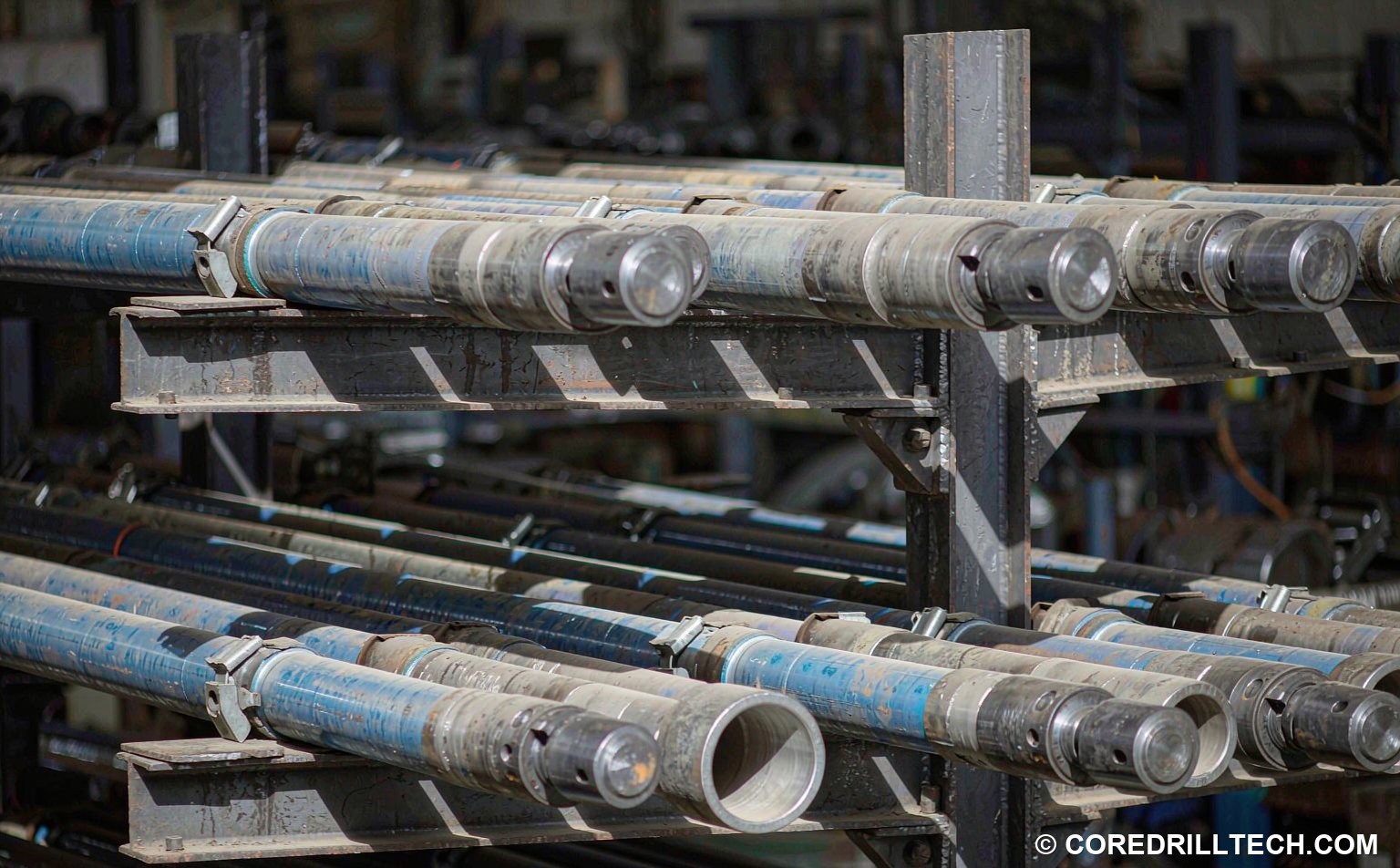
Wireline rod strings carry a W after the size: BTW, NTW and HTW pair with the BQ, NQ and HQ core barrels respectively. The hole diameters are the same as the Q-series; the W string is designed so the inner tube can be pulled on a wireline overshot without pulling the rods. PQ is the same in both systems at the sizes we supply.
A practical rule for selection: take your target depth, add 10 % for deviation and casing, then check the rating at the rod size you will actually drill most of the metreage with. If your programme is 800 m of NQ with HQ tails, the NQ figure matters most — and the CH-1200 at 1,000 m NQ carries it with margin. If the same programme needs 400 m of PQ for geotechnical logging, check the PQ rating separately, because PQ depth is always the shortest number on the sheet.
One more habit worth copying: ask every supplier to state depth per rod size in writing, not as a single headline number. It is the fastest way to compare two machines honestly, and it is exactly how we quote — BTW/BQ, NTW/NQ, HTW/HQ and PQ, in writing, on every quotation we issue.