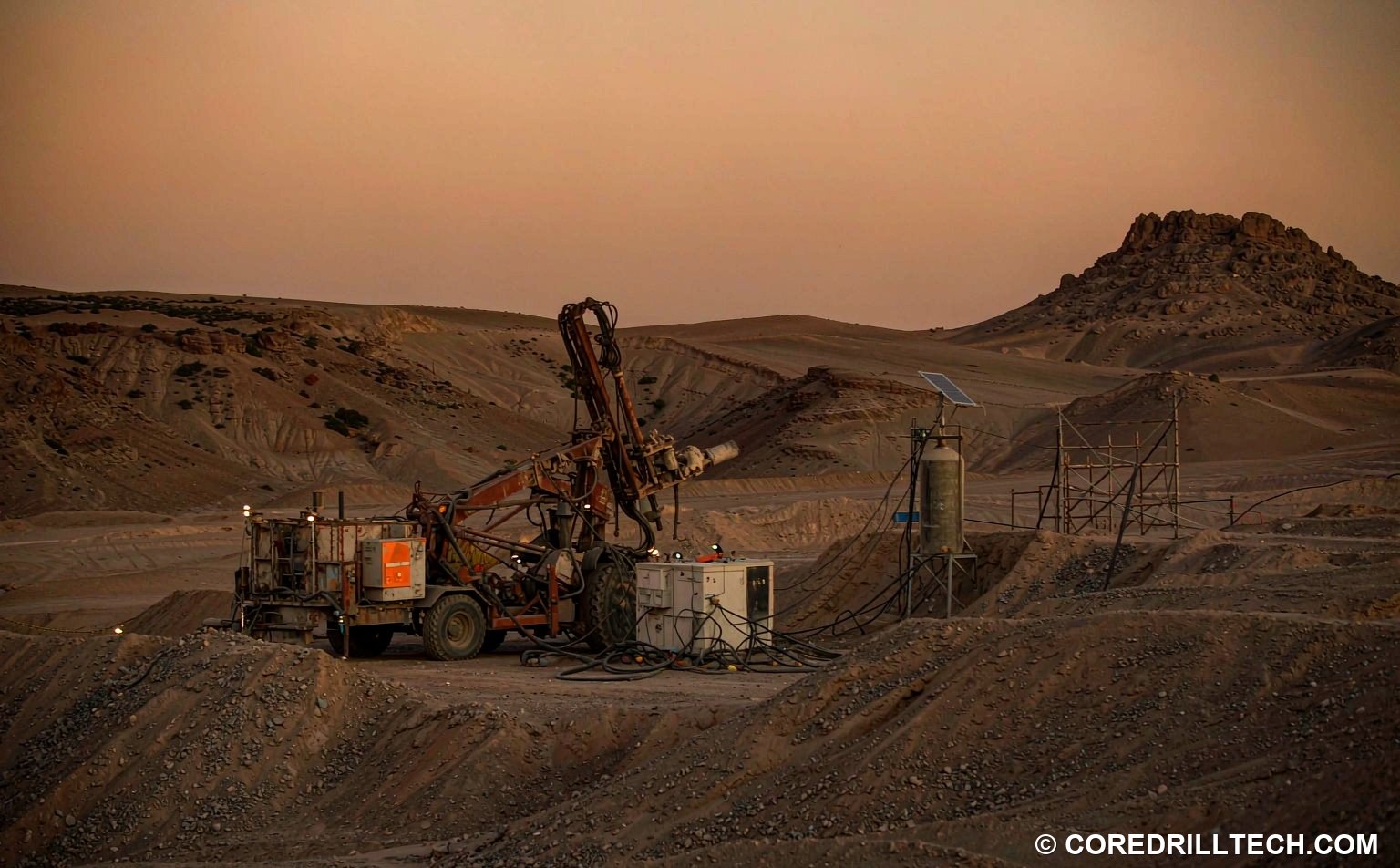
Above 3,500 m, a naturally aspirated diesel loses roughly 3% of its rated power per 300 m of additional altitude. A 132 kW unit at 4,300 m is effectively a 100 kW unit — plan your depth and diameter against the derated figure, not the brochure.
Cold is the second factor. Hydraulic oil that is fine at sea level becomes unmanageable at −15 °C. Specify low-temperature oil, a heated tank and a block heater, and run a 20-minute warm-up cycle before loading the pump.
Third, cooling. Thin air removes less heat. Clean the radiator and hydraulic cooler daily; dust at altitude is fine and it packs the fins quickly.
Fourth, bit life. Lower atmospheric pressure does not change rock, but colder water and different drilling fluid behaviour do. Expect to adjust impregnated bit matrix one step softer in hard, cold formations.
Fifth, crew. Altitude sickness reduces shift productivity by 20–30% in the first week. Build an acclimatisation week into the schedule instead of discovering it on site.
Sixth, spares. Ship a full seal kit, a spare hydraulic pump and two chucks with the rig. A 10-day freight delay at 4,300 m costs more than the parts.